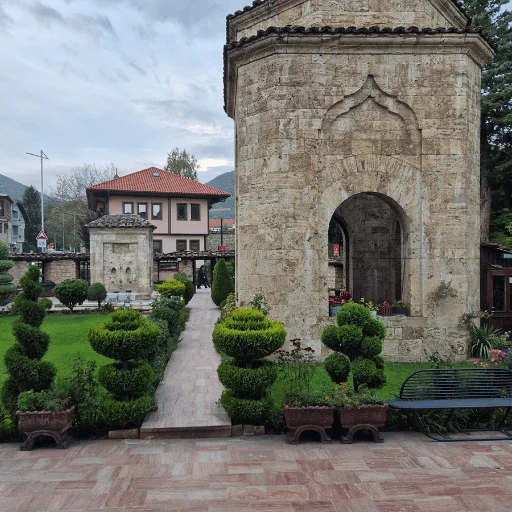
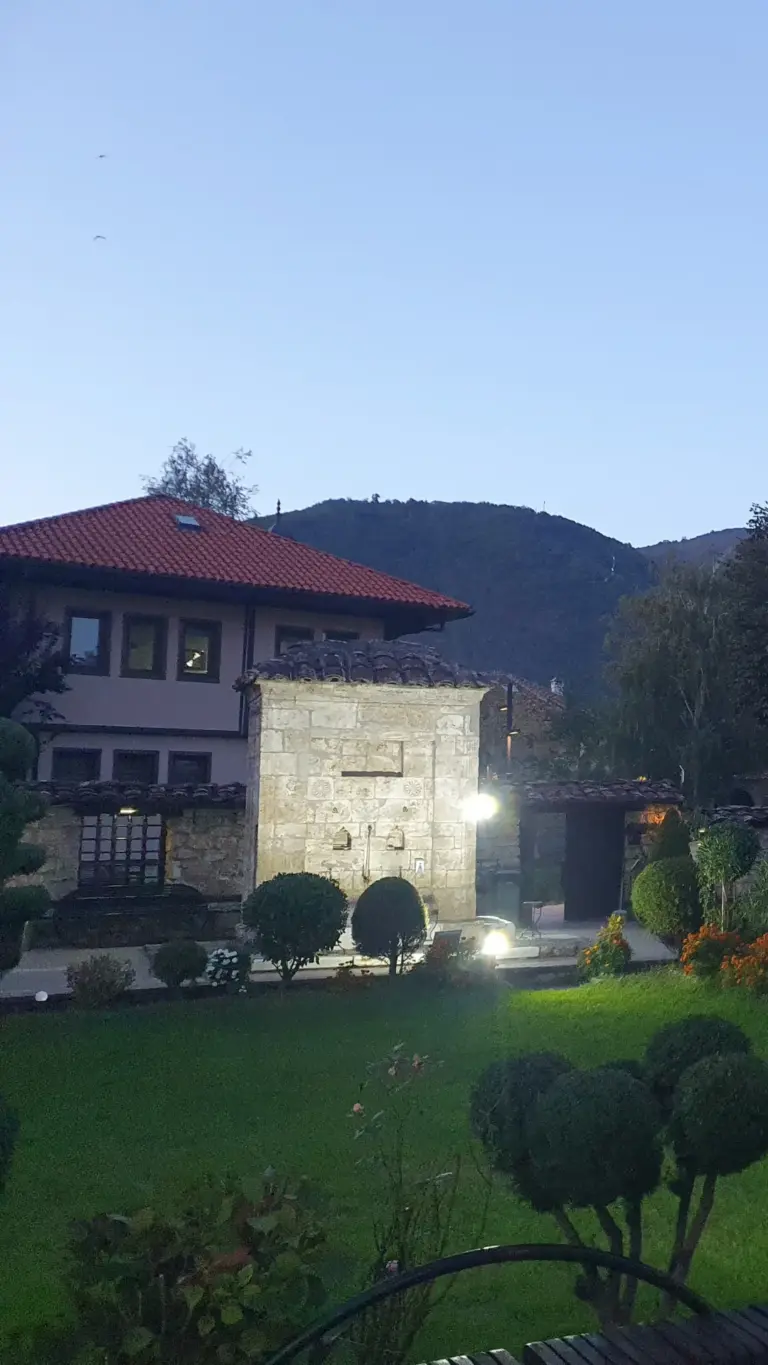
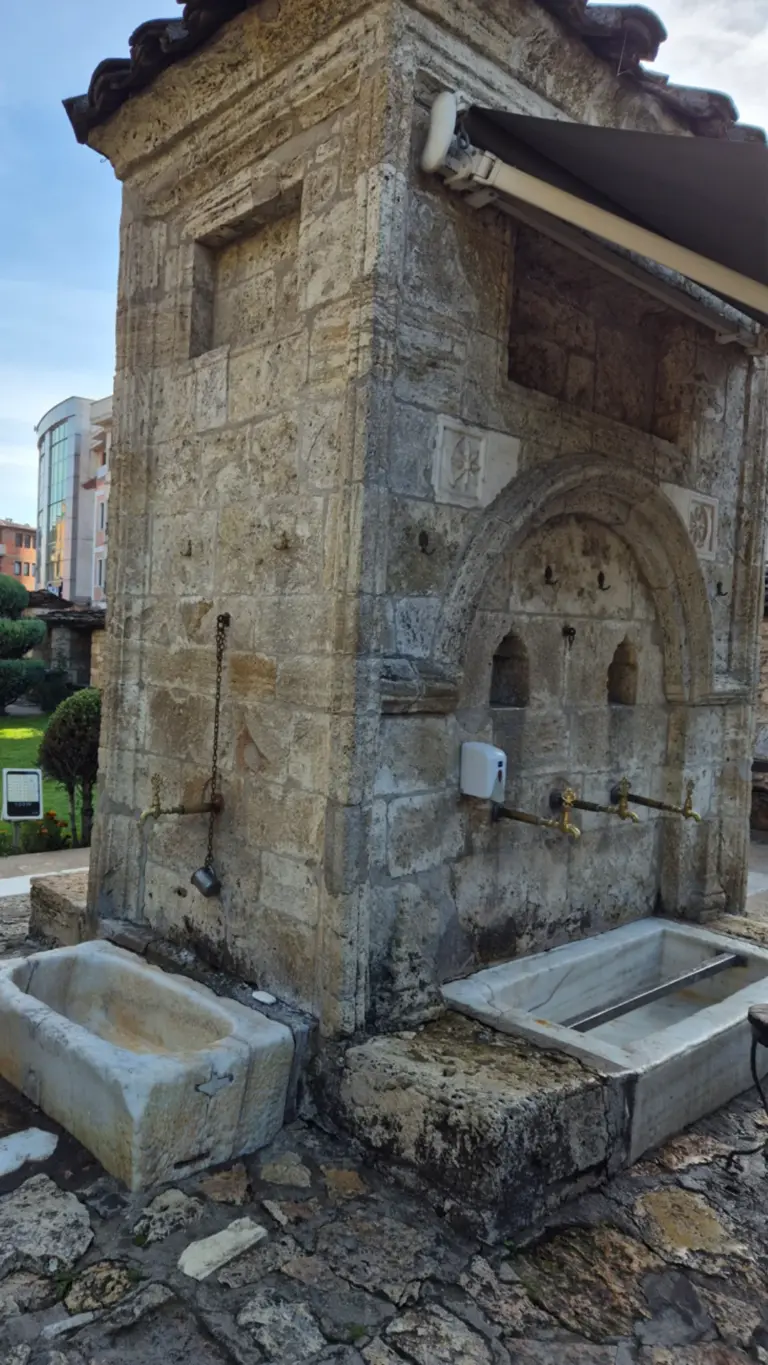
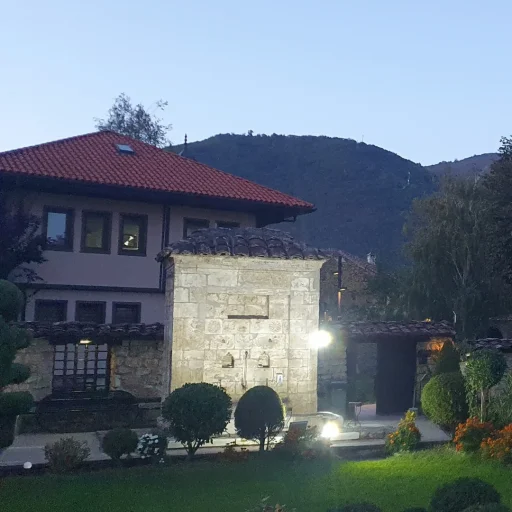
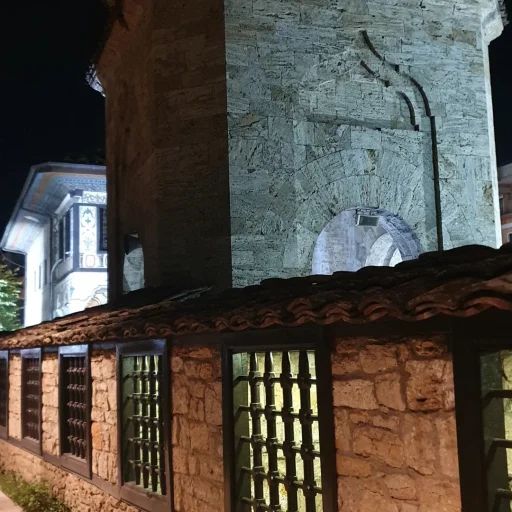
The Painted Mosque of Tetovo, also known as the Šarena Džamija, is famous for its exceptionally rich and colourful decoration. An earlier mosque was built on this site in the 15th century. However, most of the appearance we see today dates from a major renovation in 1833. At that time, Abdurrahman Pasha had the mosque rebuilt and commissioned skilled craftsmen from the Debar region.
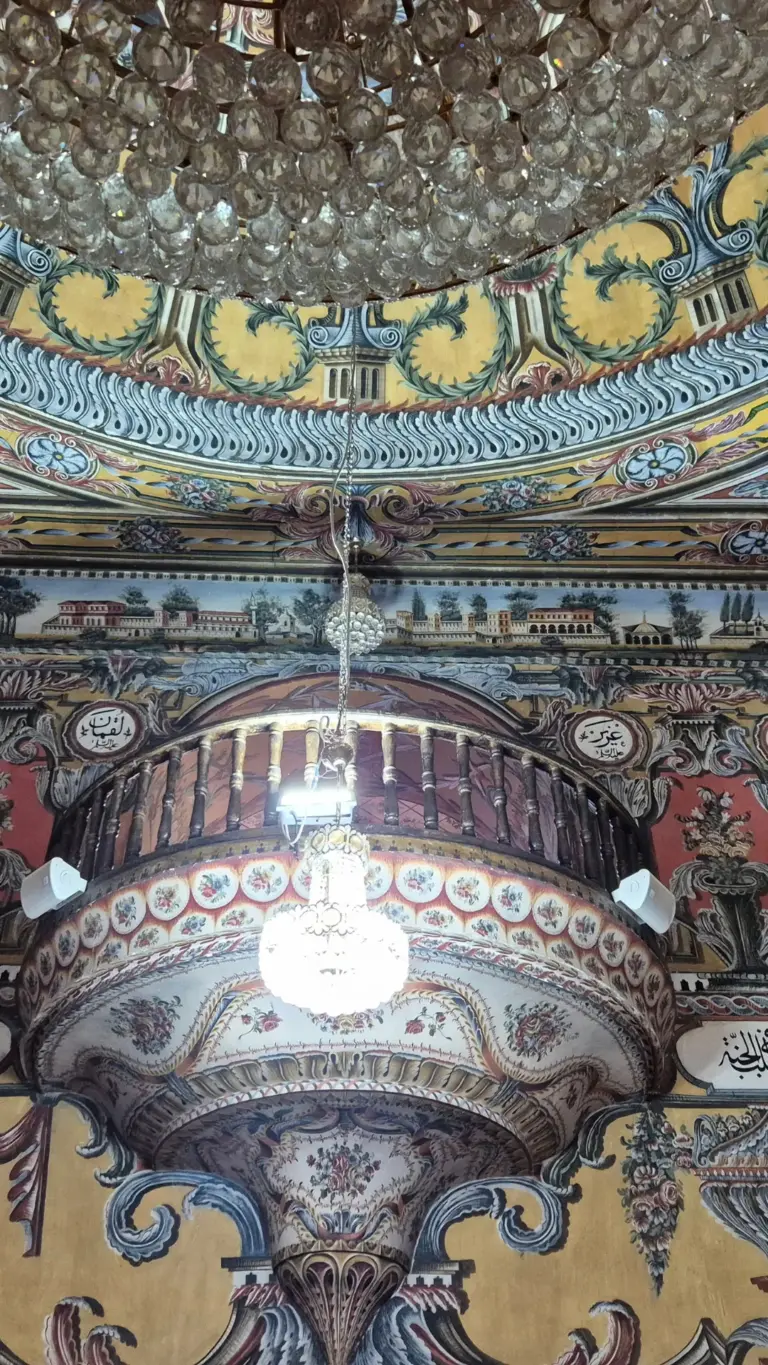
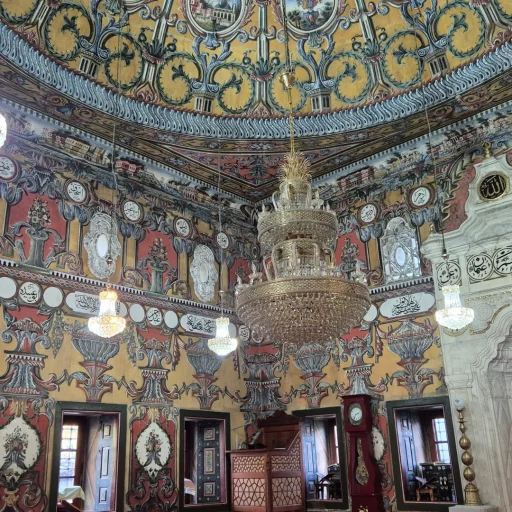
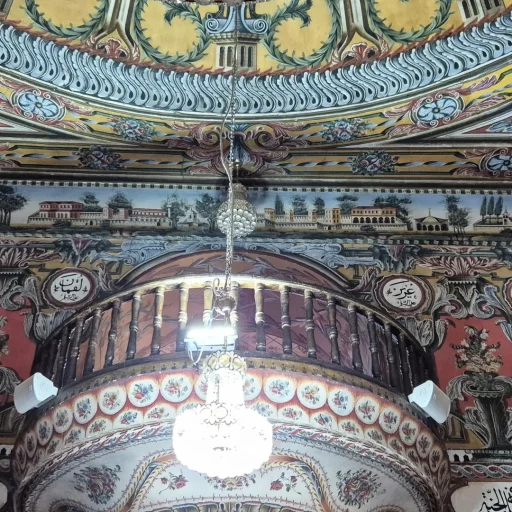
One of the first things visitors notice is that almost no wall space has been left undecorated. The interior is covered with vines, flowers, ornaments, calligraphy, and small paintings of buildings and landscapes. Especially striking are the round medallions with Arabic calligraphy. Writing plays an important role in Islamic art, because religious texts and names can be both meaningful and decorative at the same time.
The many paintings of landscapes and architecture are particularly unusual. Mosques are often decorated mainly with geometric patterns, plant motifs, and calligraphy. In Tetovo, however, there are also views of towns and buildings, including a depiction of Mecca. This special combination is one of the features that makes the mosque so distinctive.
The decoration also tells us something about the Ottoman Empire in the early 19th century. By this time, artistic styles had become more varied than during the classical Ottoman period. European influences, especially Baroque and Rococo, had already found their way into Ottoman art. Curved shapes, rich decoration, bright colours, and a love of detail are typical features of these styles. However, these European elements were not simply copied. They were combined with traditional Ottoman designs and local Balkan motifs.
This can be seen very clearly in the interior. Some painted columns, frames, and architectural details almost look like real parts of the building. Around them are flowers, arabesques, and calligraphy. As a result, the mosque feels at the same time like a place of prayer, a painted garden, and a picture book of the world of its time.
The technique used for the decoration is also unusual. Instead of the ceramic tiles found in many famous Ottoman mosques, large areas here were painted directly. A local tradition even says that egg white was used in preparing or preserving the colours. This story is often repeated, although it should be understood more as a local tradition than as a fully proven historical fact.

Lorem ipsum dolor sit amet, consectetur adipiscing elit. Ut elit tellus, luctus nec ullamcorper mattis, pulvinar dapibus leo.